

Go Further. Grow Together. WEGO Medical is seeking talented Local Sales Representatives to support our expanding international business and strengthen our presence in key global

Blood Collection & Processing Consumables
Single Blood Collection Bag
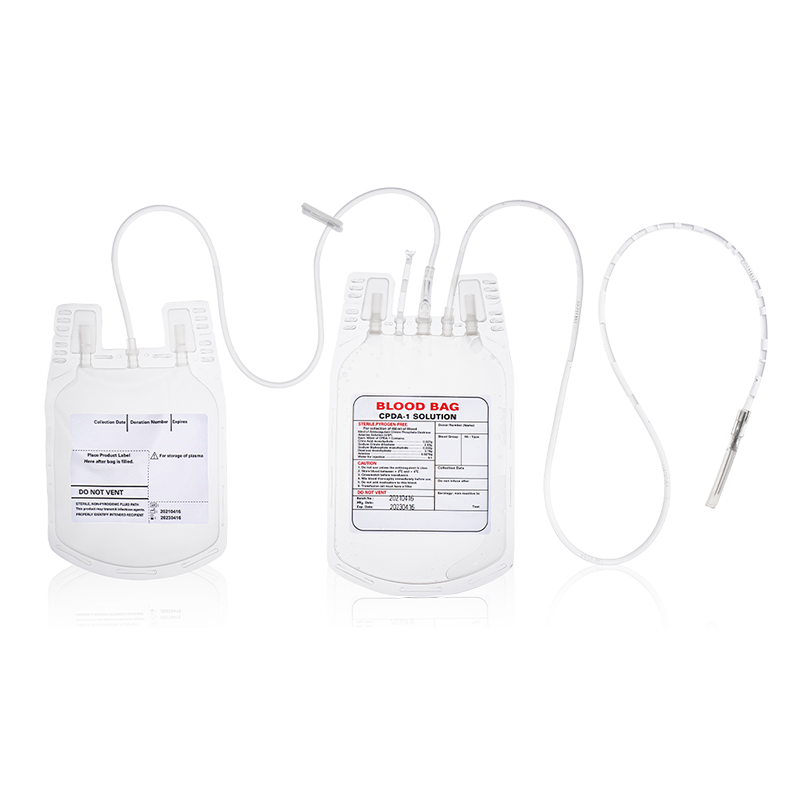
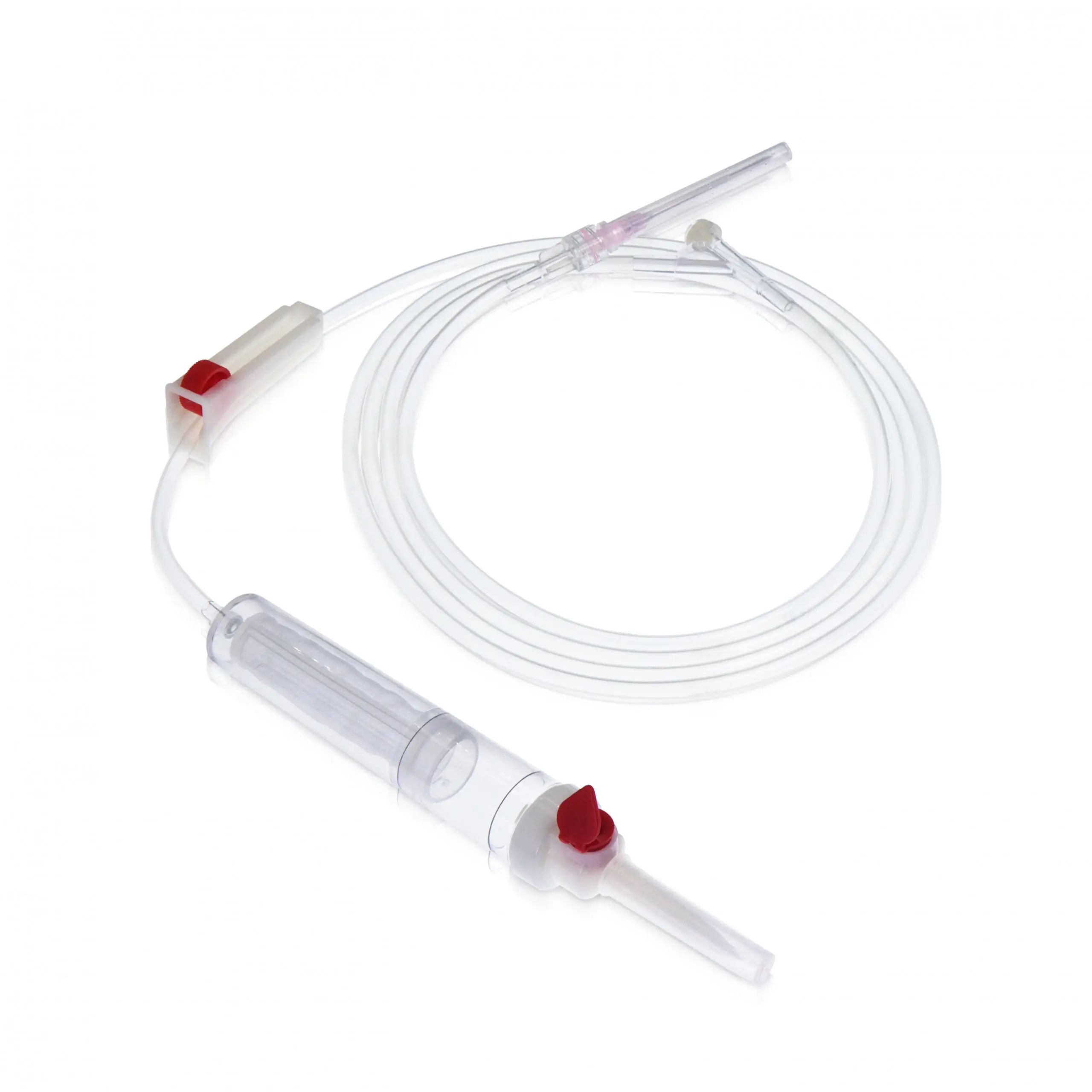
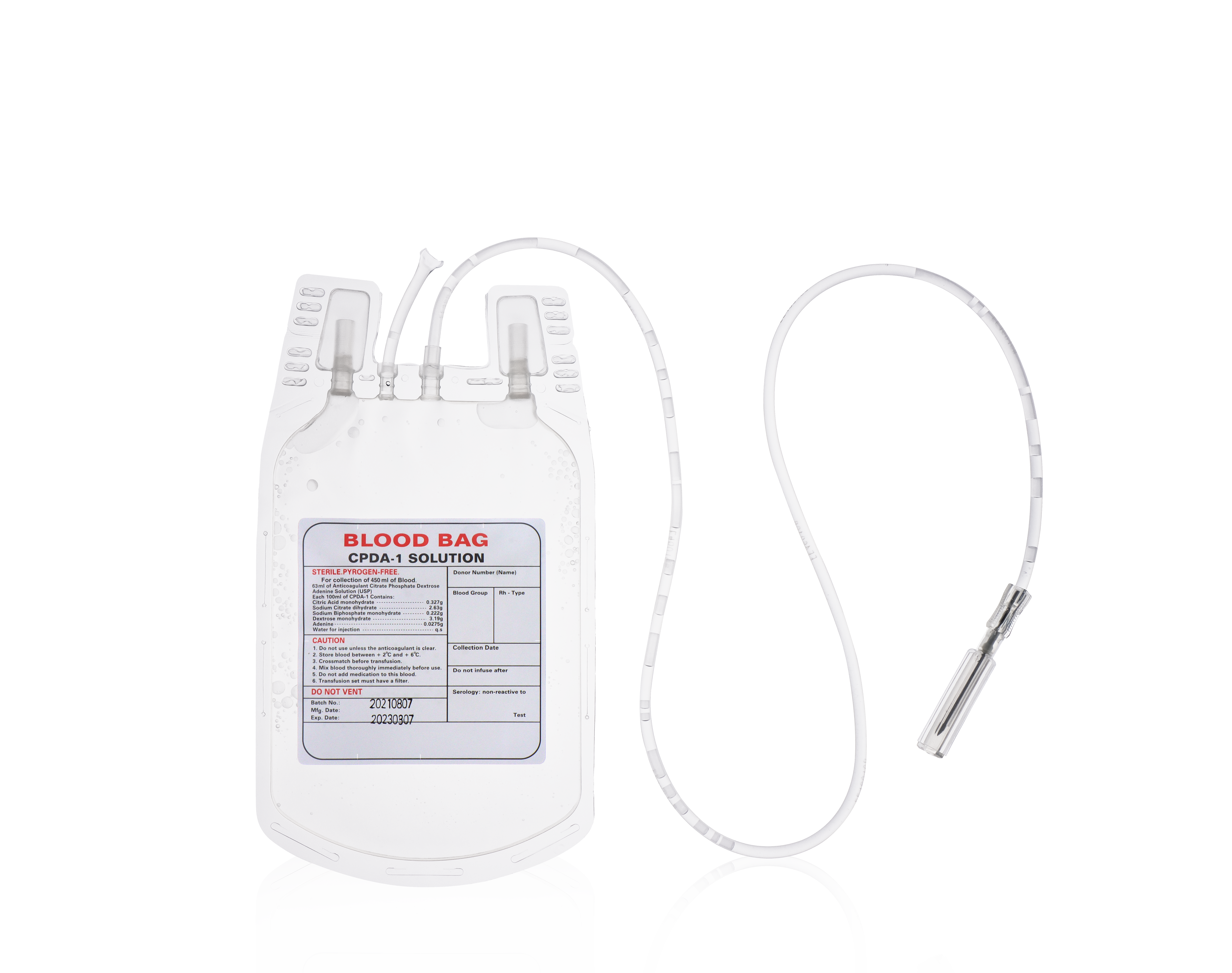
WEGO single whole blood collection bag is used for collection of whole blood with anticoagulant CPDA-1 solutions USP. It is composed of a bag, a collection needle and a tube.
WG02-001-001
Single Blood Collection Bags
Single blood collection bags are used for collection of whole blood with anticoagulant CPDA-1 solutions USP.
This Single blood bag system with a primary bag contains anticoagulant CPDA-1 (Citrate-Phosphate-Dextrose-Adenine), also called CPDA-1 single blood bag, which preserves red blood cells up to 35 days at 2℃-6℃. The blood collection bag with anticoagulant are composed of three parts: the bag body, the collection needle and the tube.
1.Advanced Preservation:
Single blood collection bags utilize CPDA-1 anticoagulant, offering effective preservation of red blood cells for up to 35 days when stored at 2°C to 6°C. The CPDA-1 single blood bag is specifically designed to maintain RBC viability throughout the storage period.
2.Safety & Efficacy:
As certified medical devices, single blood collection bags are manufactured to ensure safety and efficacy in transfusion medicine. Each whole blood collection bag with CPDA anticoagulant is engineered to uphold blood integrity from donation to transfusion, meeting rigorous clinical standards.
3.Clinical Advantages:
Recognized for high safety, excellent stability, and user-friendly design, WEGO blood collection bags with anticoagulant are widely trusted in healthcare settings globally.
Properties
| Properties | Medical Polymer Products |
Specification
| Code | Capacity | Anticoagulant | Needle |
| SC-100 | 100ml | CPDA-1 | 16G/17G |
| SC-250 | 250ml | CPDA-1 | 16G/17G |
| SC-350 | 350ml | CPDA-1 | 16G/17G |
| SC-450 | 450ml | CPDA-1 | 16G/17G |
| SC-500 | 500ml | CPDA-1 | 16G/17G |
Classify
| Classify | Welding/Extending |
Additive Capacity
| Additive Capacity | CPDA-1,CPD-SAGM |
Tube material
| Tube material | PET/GLASS |
Supply Ability
| Supply ability | 1000000 Piece/Pieces per Month |

On May 7, 2026, the 2026 WEGO Global Partner Conference was grandly held at Weihaiwei Hotel in Weihai, China. Under the theme “One for the

WEGO Medical will participate in WHX Lagos 2026, taking place from June 2 to 4 in Lagos, Nigeria. The exhibition serves as an important platform
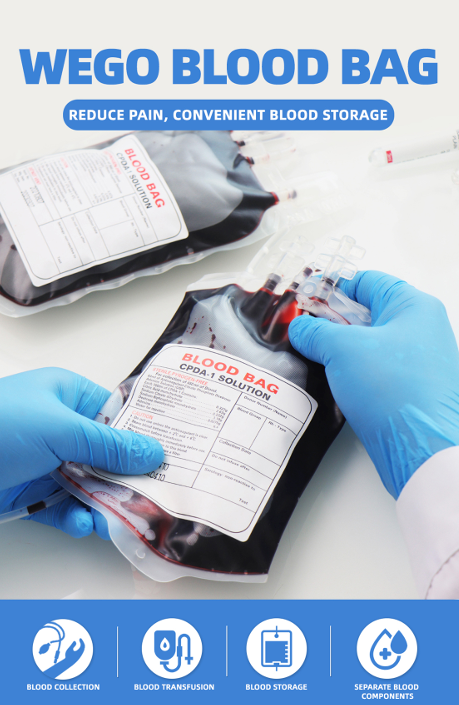
In clinical environments, certain tools form the operational backbone of essential procedures. Among these, the single blood collection bag is a primary example. This specialized
What is a single blood bag used for?
Single blood collection bags are used for collection of whole blood with anticoagulant CPDA-1 solutions USP, preserving red blood cells up to 35 days at 2℃-6℃.
What is the difference between a single and double blood bag?
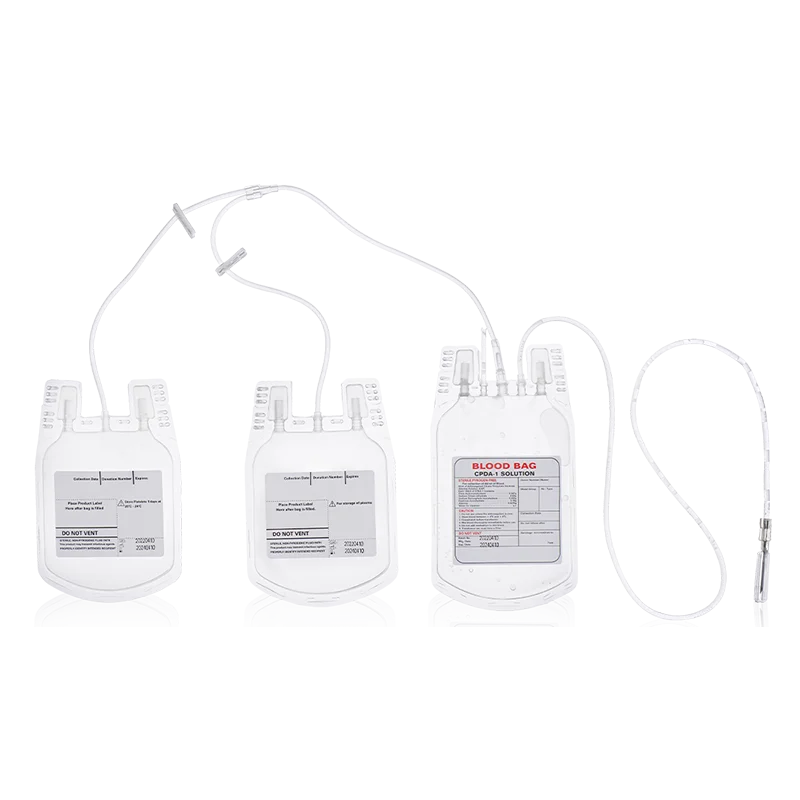
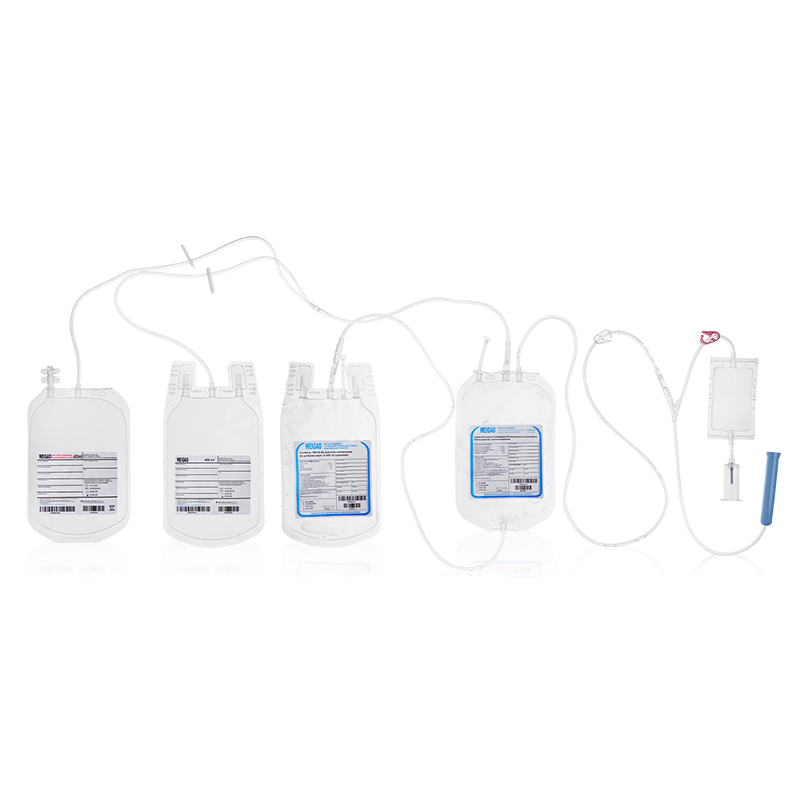
A single blood bag is a whole blood collection bag, without separating it into parts. After the double blood bag collection, through centrifugal separation technology, one bag of blood can be divided into different components such as red blood cells, platelets, and plasma, thus making full use of the blood and benefiting multiple patients with different diseases.
What is the capacity of a single blood bag?
The capacity of single blood collection bags varies by model. The standard single blood bag (such as SC-450 CPDA-1 anticoagulant blood bag) has a 450ml capacity, while other sizes from 100ml to 500ml cater to specific needs like pediatrics.
How many people can one bag of blood save?
The lifesaving potential of a single blood collection bag depends on its processing. When it is used for whole blood transfusion, it typically aids one patient. However, if its components are separated – into red blood cells, plasma, and platelets – that same donation can help save up to three lives.
How many minutes to donate one bag of blood?
The actual blood draw for a standard donation is relatively quick, typically lasting just 8 to 10 minutes. Factoring in registration, health screening, and post-donation rest, however, the entire appointment takes about 45 minutes to an hour.